Seeds are invisible
Eaters, and many growers, don’t know where seed comes from or why local adaptation matters. As one educator put it: good food requires good seed, and almost no one is told.
Introduction
Seeds are the source of life that we cultivate in our fields and gardens. Research and buzzwords are swirling to secure a functional food system but fall short on the connection of seed and where it should be planted. We see the overlooked notion that plants adapt to local conditions, thus locally adapted seed produces more environmentally resilient plants cared for by a culture of loving stewards.
The hidden costs
Seeds bred for distant bioregions are less suited for local pests, soils, and climate. These factors compound across economic, food, environmental, and cultural systems:
Job one
Four firms control half to two-thirds of the world’s commercial seed. When a handful of companies decide what gets bred, grown, and sold, seed becomes a commodity, and the living relationship between people, plants, and place is cut out of the deal.
Reconsidering how people, place, and plants are balanced starts with realizing we have forgotten this connection. Every packet of regionally grown seed, every seed library, every keeper passing a variety on is infrastructure the consolidated market cannot provide.
Defining terms
Place-based language is not just about geography. We want to promote terms that work with seed producers and food growers, as well as carry on traditions with seed that return people to the land . We will work towards recognizing the most resilient seed for the land and having dignity for the people that have sustained that seed tradition for others to benefit.
Interdependent
As people we need each other. We are asking you to help us build this movement. We also need nature as we honor the connection seed has with region for better agricultural outcomes as well as our success in these environments.
Find language that works
We need language that works for all of us and this project. We are designating terms that work in most scenarios, terms we need to define for the scope of this project, and terms that we need more dialogue about which will be part of our cultural conversations.
A long continuum of care
For thousands of years before commercial seed markets existed, Indigenous peoples across the Americas cultivated, selected, and shared the seeds the world now depends on, including corn, beans, squash, chilies, and potatoes.
This work continues today through traditional seed keepers, seed libraries, community growers, and small seed companies. Any effort to rebuild regional seed systems must stand on this continuum of care and ancestral remembering, and acknowledge the people who are carrying this work forward despite centuries of disruption.
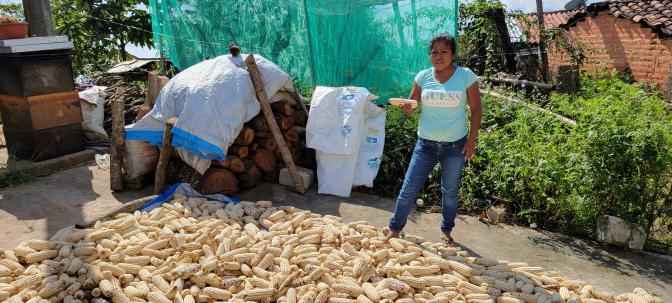 Photo: Marcos Cortez Bacilio
 What we heard · field interviews
Eaters, and many growers, don’t know where seed comes from or why local adaptation matters. As one educator put it: good food requires good seed, and almost no one is told.
Farming runs on thin margins. Growers choose large national suppliers they trust to germinate and yield uniformly, even when they value regional seed. "Growers will care when buyers care."
Maintaining regional varieties depends heavily on unpaid labor. "We don’t make money selling seeds. It’s passion rather than profit."
Seeds are not just for boutique enthusiasts. In order to scale up economic and environmental benefits we need to connect the concept of local seed production with the reality of predictable and sizable yields where food will reach a critical mass of consumers.
Don’t judge each day by the harvest you reap, but by the seeds that you plant.
Robert Louis Stevenson
Stronger public understanding is what lets regional seed efforts be seen, supported, and funded. Here is the plan to build it.
See the plan →